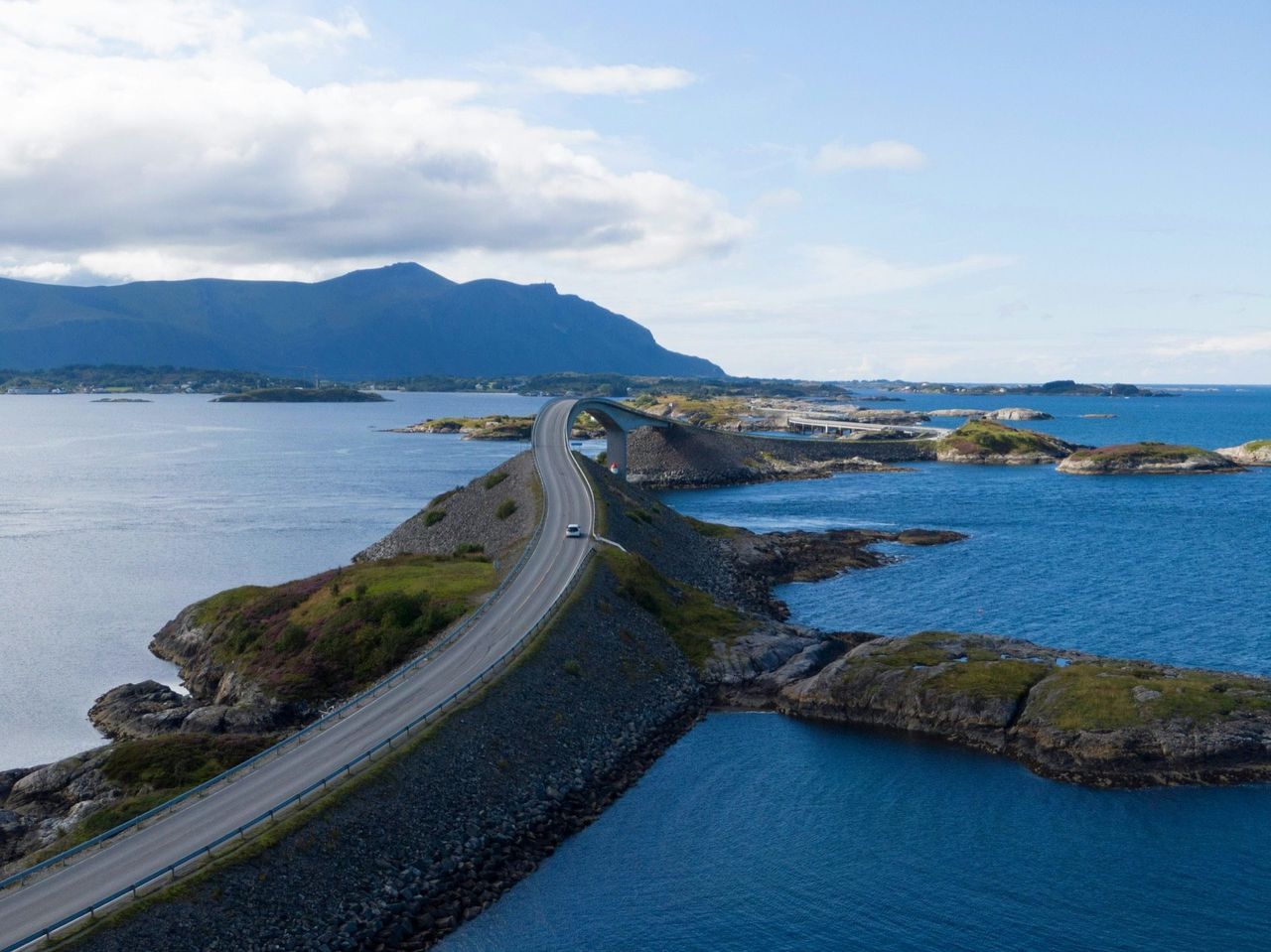
The Atlantic Road is open all year and never closes for snow. What can close it, briefly and rarely, is a storm — and a storm here is also the reason a lot of people come in the first place.
Last updated 14 August 2026
Open all year — with one caveat
Is it actually open?
Yes. This is the question we get most often between October and March, and the answer is almost always the same: the Atlantic Road is open, right now, and it will be open tomorrow.
The confusion comes from Norway's mountain passes. Roads like Trollstigen and Gamle Strynefjellsvegen close for the winter — some of them for six months. The Atlantic Road is not that kind of road. It runs at sea level along the coast, it is a normal county road (Fv64) that people drive to work on, and it is cleared and salted like any other. Snow is rarely the problem out here; the sea keeps the air just warm enough that winter on this stretch of coast is more often wet than white.
What can close it is weather of a different kind. In a severe storm the police or the road authority may close the road for a few hours until the worst passes. That is a handful of times a winter, not a season-long shutdown, and it is announced in advance when the forecast allows.
What a storm here looks like
The road was built through twelve full storms between 1983 and 1989. There are construction photographs from those years that look less like roadworks than like the end of the world — and that history is the honest preview of what a westerly gale still does here.
When the wind comes in from the open Atlantic, waves break clean over the lower causeways between the bridges. Spray reaches the road deck. The asphalt turns slick with salt water, and visibility can drop to nothing for the few seconds a wave takes to cross. Then it clears, and you can see for twenty kilometres, and then it happens again.
This is not a freak event. It is what the road is famous for, and it is why the storm-watching season — roughly October through February — brings photographers here from all over Europe. If you have seen a photograph of a wave swallowing a bridge in Norway, there is a good chance you were looking at Storseisundbrua.
Driving it safely in winter
None of this is dangerous if you treat it as what it is: an exposed coastal road in bad weather. A few things matter more here than they would inland.
- Tyres. Norwegian law requires tyres suited to the conditions. Between roughly November and Easter that means proper winter tyres, and every hire car in this region comes fitted with them as standard.
- Crosswind. The bridges sit high and unsheltered. Campervans, motorhomes and vans with roof boxes get pushed around up there in a way an ordinary car does not. If the wind warning is out, this is the vehicle class that should wait.
- Never stop on a bridge. In good weather it is inconsiderate; in a storm it is genuinely unsafe. There are proper laybys and rest areas — use them.
- Watch the sea, not just the road. Waves arrive at irregular intervals. If one has just crossed the causeway ahead of you, another may follow.
- Rinse the car afterwards. Salt water is hard on paint and harder on brake components. Any petrol station in Kristiansund has a wash.
How to time a storm — and how to check
You cannot book a storm, but you can put yourself in the right week and then read the forecast. Late autumn and midwinter are when the low-pressure systems queue up in the North Atlantic; a front usually announces itself two or three days out.
Before you drive, check two things. Road status at vegvesen.no/trafikk or the Norwegian Public Roads Administration's phone line, 175, which is answered around the clock. Then the wind forecast for Hustadvika at yr.no — the sea state follows the wind by a few hours.
Both are official sources and both are more current than any guide, including this one.
If you are staying with us, there is a shortcut: ask. We live ten minutes away and we can see the weather coming across the sound before the forecast catches up with it. Guests regularly get a message from Karl saying tonight is the night.
Is winter worth it?
It depends on what you came for. Daylight in December is short — the sun is up for roughly five hours, and the good light lasts about two of them. If your plan is a long list of outdoor sights, summer is the easier season.
But winter gives you three things summer cannot. The road at its most dramatic, with the sea doing the work. Almost no other traffic, so you can actually stop and look. And darkness — which on a clear night is what makes the northern lights possible at all.
Our own view, after a few winters of watching guests arrive nervous and leave converted: come in late autumn or midwinter, give yourself more days than you think you need, and let the weather decide the itinerary rather than the other way round.
Winter is also the season a whole house earns its keep. The Heritage gives six people their own living room to come back into, and Atlantic Grand sleeps eight with a sea-facing balcony to watch the weather from.
Keep reading
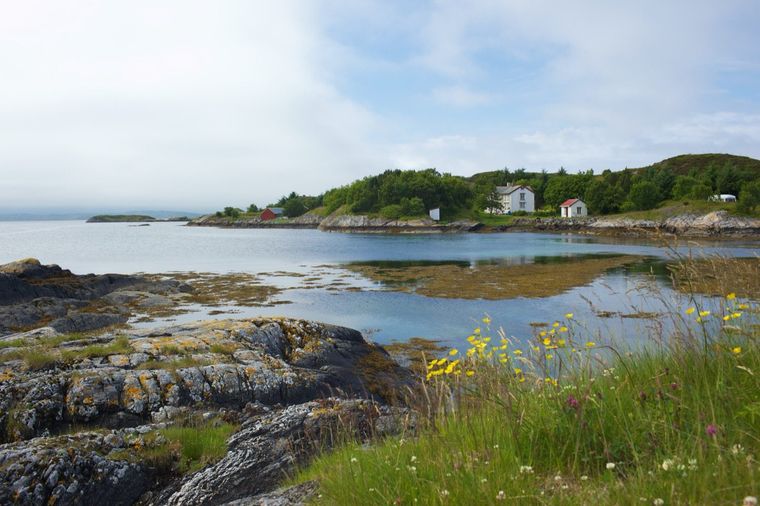
Every stop worth making
Eight bridges, four viewpoints and a stave church, in order.
Read the guide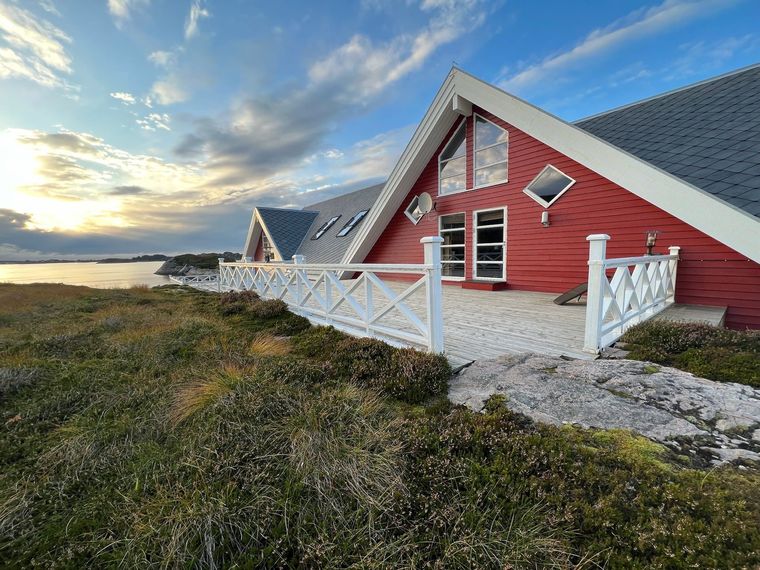
Getting to Averøy
Airports, the tunnel, and the toll that appeared in May 2026.
Read the guide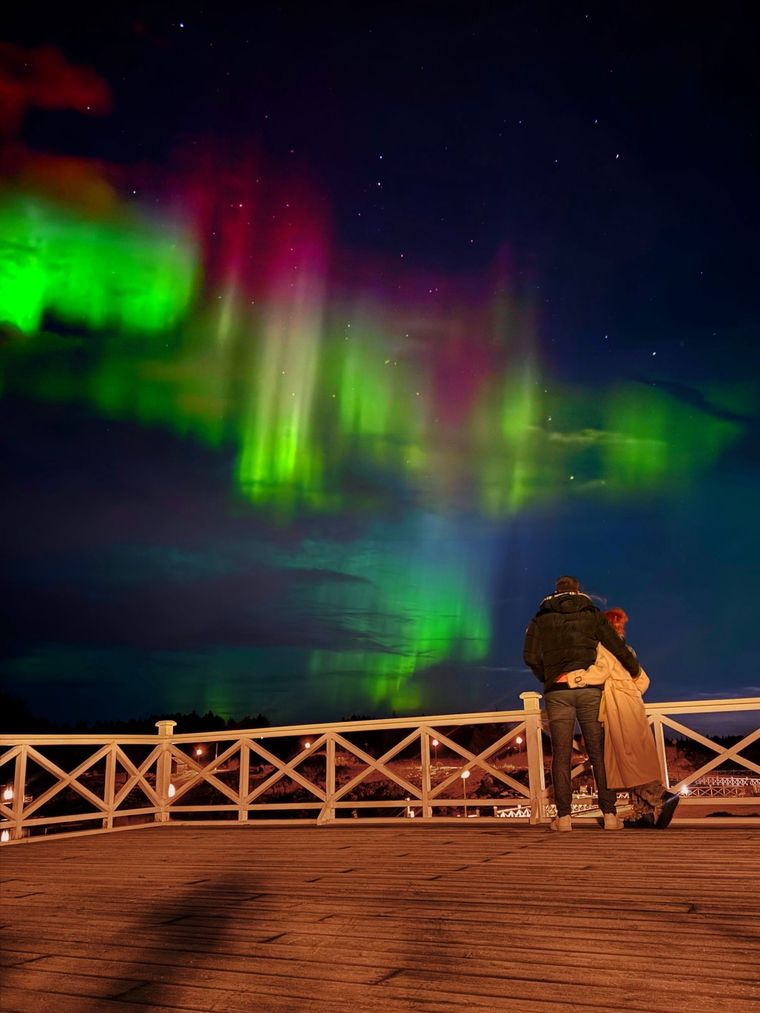
Northern lights on Averøy
Honest expectations at 63°N — and how to give yourself the best odds.
Read the guideEvery experience starts from your doorstep.
Five homes on Ekkilsøy, minutes from the Atlantic Ocean Road — with the Northern Lights in winter and light that never quite leaves the sky in summer. Book directly with us for the best welcome.
Check availability